Outfielders

Co-located and synchronous social computing for live sports
PROBLEM STATEMENT

PROBLEM STATEMENT

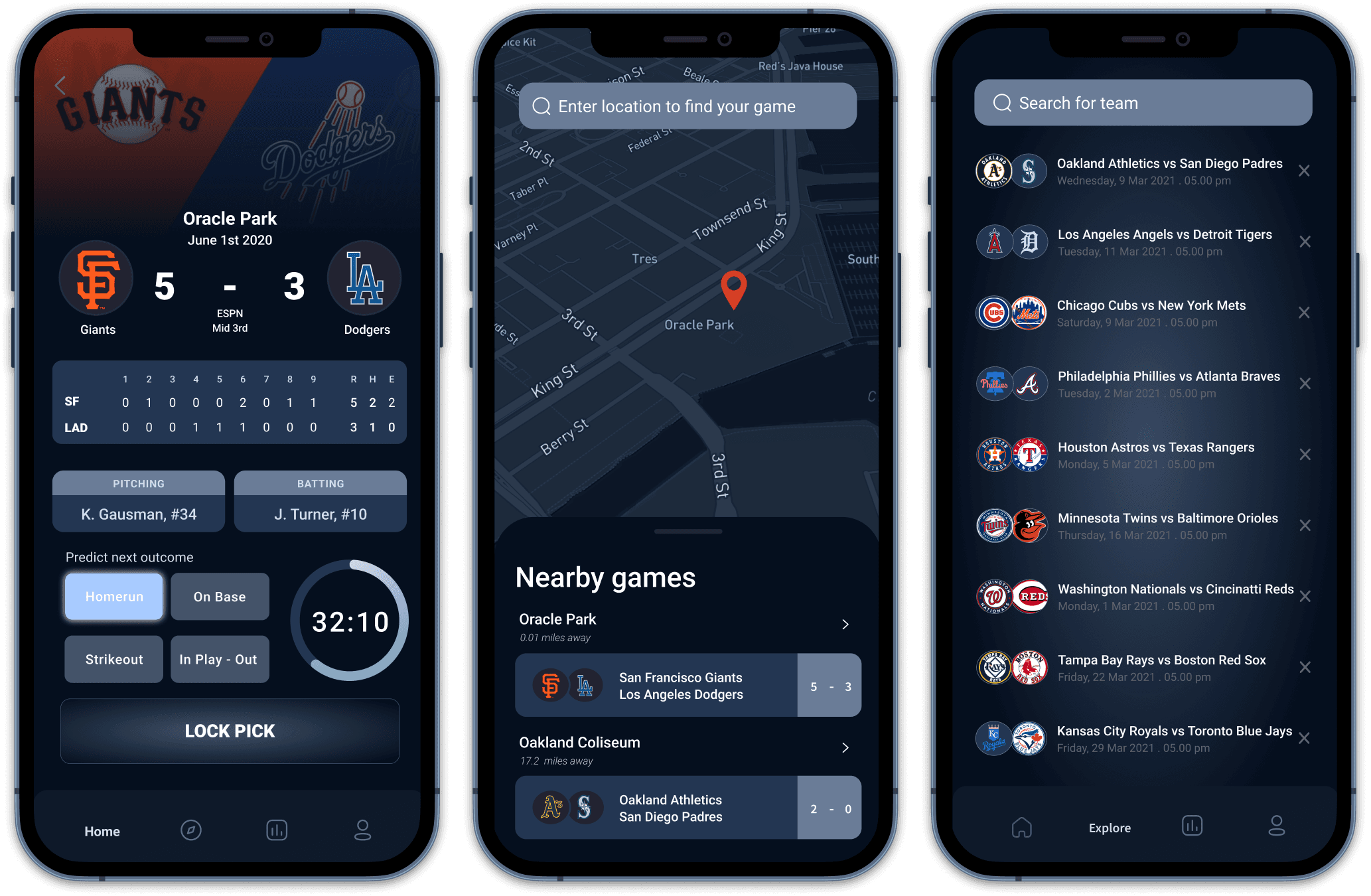
Despite being surrounded by thousands of fans, the live sports experience often feels isolating — spectators lack structured ways to connect beyond proximity. I designed a synchronous platform that channels organic fan behaviors like cheering and rivalry into meaningful real-time interactions, transforming individual attendance into collective participation.

OBJECTIVES

OBJECTIVES

Build a co-located, synchronous social computing experience

Build a co-located, synchronous social computing experience

Design a social computing platform that facilitates live interactions, allowing fans to engage with each other in the moment.

Design a social computing platform that facilitates live interactions, allowing fans to engage with each other in the moment.

Inclusive and accessible participation

Inclusive and accessible participation

Ensure the platform is intuitive and welcoming for all fans, regardless of experience level or team affiliation.

Ensure the platform is intuitive and welcoming for all fans, regardless of experience level or team affiliation.

Encourage social interactions

Encourage social interactions

Incorporate features that promote friendly competition, discussion, and connection among attendees.

Incorporate features that promote friendly competition, discussion, and connection among attendees.

Field Research

To design a platform that truly enhances live sporting events, we conducted field research by attending baseball games and observing fan interactions in real time. This hands-on approach provided critical insights into the diverse ways people engage with the game and each other.

To design a platform that truly enhances live sporting events, we conducted field research by attending baseball games and observing fan interactions in real time. This hands-on approach provided critical insights into the diverse ways people engage with the game and each other.

Key Insights

Key Insights

Stadium layout influences social interaction

Stadium layout influences social interaction

The density of the crowd and stadium seating played a major role in engagement. Fans seated in the outfield interacted most when a ball was hit toward them, while those near home plate were consistently engaged with both their neighbors and nearby players.

The density of the crowd and stadium seating played a major role in engagement. Fans seated in the outfield interacted most when a ball was hit toward them, while those near home plate were consistently engaged with both their neighbors and nearby players.

Most fans actively engage with the game

Most fans actively engage with the game

Cheering, predicting outcomes, rooting for home runs, and heckling were common behaviors, showcasing the social and competitive nature of live sports.

Cheering, predicting outcomes, rooting for home runs, and heckling were common behaviors, showcasing the social and competitive nature of live sports.

Some fans prefer a less intense experience

Some fans prefer a less intense experience

A smaller subset of attendees were less engaged, sometimes appearing intimidated by louder fans or overwhelmed by the intensity of game-day energy.

A smaller subset of attendees were less engaged, sometimes appearing intimidated by louder fans or overwhelmed by the intensity of game-day energy.

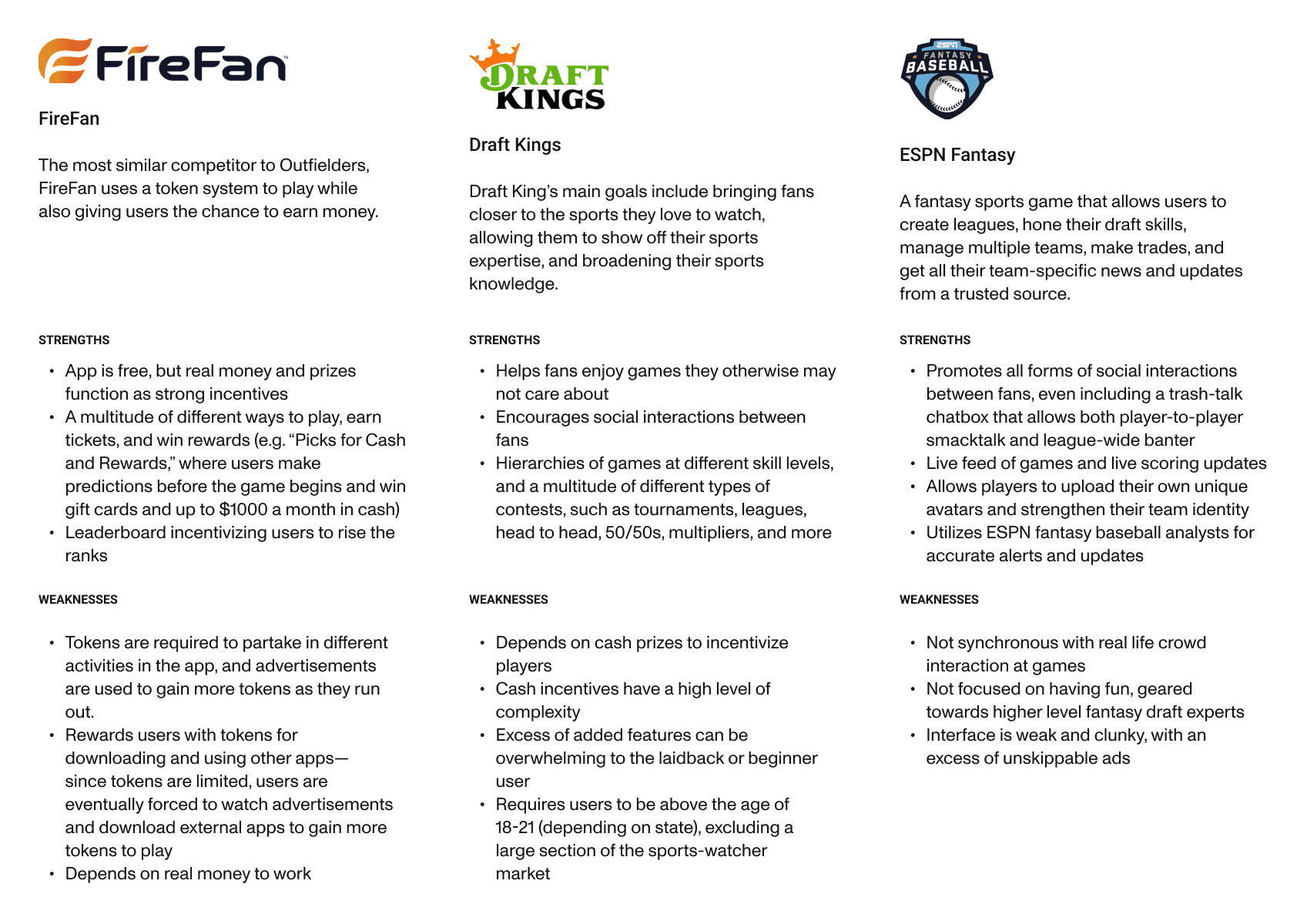
Competitive Analysis

Key Insights

Key Insights

Real-money gambling creates barriers for younger fans

Real-money gambling creates barriers for younger fans

Most fantasy sports apps rely heavily on real-money gambling, excluding a large portion of younger fans due to online gambling restrictions.

Most fantasy sports apps rely heavily on real-money gambling, excluding a large portion of younger fans due to online gambling restrictions.

Current platforms cater to experts, not casual fans

Current platforms cater to experts, not casual fans

Many existing platforms require users to have extensive knowledge of the sport to participate, making them intimidating for newcomers and casual viewers.

Many existing platforms require users to have extensive knowledge of the sport to participate, making them intimidating for newcomers and casual viewers.

Lack of co-located and synchronous social interaction

Lack of co-located and synchronous social interaction

None of the existing platforms offered a co-located, synchronous experience that enhances in-person engagement at live games.

None of the existing platforms offered a co-located, synchronous experience that enhances in-person engagement at live games.

User Research

User Research

USER INTERVIEWS

USER INTERVIEWS

To ground the design in real user behavior, I conducted interviews with 30 students about their live sporting event experiences. I focused on understanding engagement patterns, identifying friction points, and observing how fans naturally interact with both the game and each other. These conversations revealed key insights about the gap between the energy of live events and the isolated nature of individual fan experiences.

INSIGHT

INSIGHT

Socializing over spectating

Socializing over spectating

Users primarily attend games to have fun with friends. While they enjoy the excitement of cheering, many dislike the more aggressive aspects of trash talk and intense yelling.

Users primarily attend games to have fun with friends. While they enjoy the excitement of cheering, many dislike the more aggressive aspects of trash talk and intense yelling.

NEED

NEED

Casual social interactions without negativity

Casual social interactions without negativity

A space where fans can engage in fun, lighthearted competition without the intimidation of excessive heckling.

A space where fans can engage in fun, lighthearted competition without the intimidation of excessive heckling.

INSIGHT

INSIGHT

Disengagement during pauses

Disengagement during pauses

Baseball’s frequent breaks in action often leave attendees bored, leading them to check their phones instead of staying immersed in the game.

Baseball’s frequent breaks in action often leave attendees bored, leading them to check their phones instead of staying immersed in the game.

NEED

NEED

Easy ways to stay engaged in gameplay

Easy ways to stay engaged in gameplay

A simple and accessible way to keep thinking about the game, even when the action slows down.

A simple and accessible way to keep thinking about the game, even when the action slows down.

INSIGHT

INSIGHT

Love for competition

Love for competition

Fans enjoy making predictions about the game’s outcome and take pride in being right, reinforcing the appeal of competitive elements.

Fans enjoy making predictions about the game’s outcome and take pride in being right, reinforcing the appeal of competitive elements.

NEED

NEED

Structured, friendly competition with meaningful stakes

Structured, friendly competition with meaningful stakes

An outlet for competitive engagement that introduces real incentives, encouraging participation in a positive and civil way.

An outlet for competitive engagement that introduces real incentives, encouraging participation in a positive and civil way.

Key takeaways

Key takeaways

This project deepened my understanding of how digital tools can amplify rather than replace physical experiences. Through field research, user interviews, and competitive analysis, I uncovered critical needs: fans craved structured competition during lulls in gameplay, wanted ways to connect that felt inclusive rather than intimidating, and valued opportunities for lighthearted interaction beyond their immediate seating area. The research process reinforced the importance of triangulating methods — observational field work revealed behaviors users didn't articulate in interviews, while competitive analysis exposed market gaps that users assumed were inevitable. Most importantly, I learned that successful social features don't force new behaviors; they give structure to interactions that already want to happen.

I conducted UX research to understand how social computing could enhance the live sporting event experience. The research examined natural fan behaviors like cheering, rivalry, and banter to identify opportunities for real-time digital interactions that would amplify collective energy and deepen connections among attendees without detracting from the game itself.

AREA

Full Stack Web Development

Timeline

8 weeks

AREA

AREA

UX Research

UX Research

Timeline

Timeline

4 weeks

4 weeks

I conducted UX research to understand how social computing could enhance the live sporting event experience. The research examined natural fan behaviors like cheering, rivalry, and banter to identify opportunities for real-time digital interactions that would amplify collective energy and deepen connections among attendees without detracting from the game itself.

AREA

UX Research

Timeline

8 weeks

AREA

UX Research

Timeline

4 weeks

I conducted UX research to understand how social computing could enhance the live sporting event experience. The research examined natural fan behaviors like cheering, rivalry, and banter to identify opportunities for real-time digital interactions that would amplify collective energy and deepen connections among attendees without detracting from the game itself.

AREA

UX Research

Timeline

4 weeks

AREA

UX Research

Timeline

4 weeks