Exploring collective nostalgia through an evolving digital repository of memories
Background
We live in an era where our memories are no longer just biological. They exist in cloud servers, photo streams, and endless scrolling feeds. Our identities, sense of self, and relationships are deeply intertwined with digital media; yet the technology that archives our lives often feels impersonal — efficient but indifferent, abundant but ephemeral.
What happens when we try to give digital memories the weight and presence of something more tangible?
This project explores the paradox of human memory in a digital age. How can a machine, cold, structured, and logical, hold something as fleeting, intimate, and chaotic as a memory? Memory Box reimagines technology as a vessel for nostalgia and reflection, creating a space where past and present coexist in an ever-evolving stream of recollection.
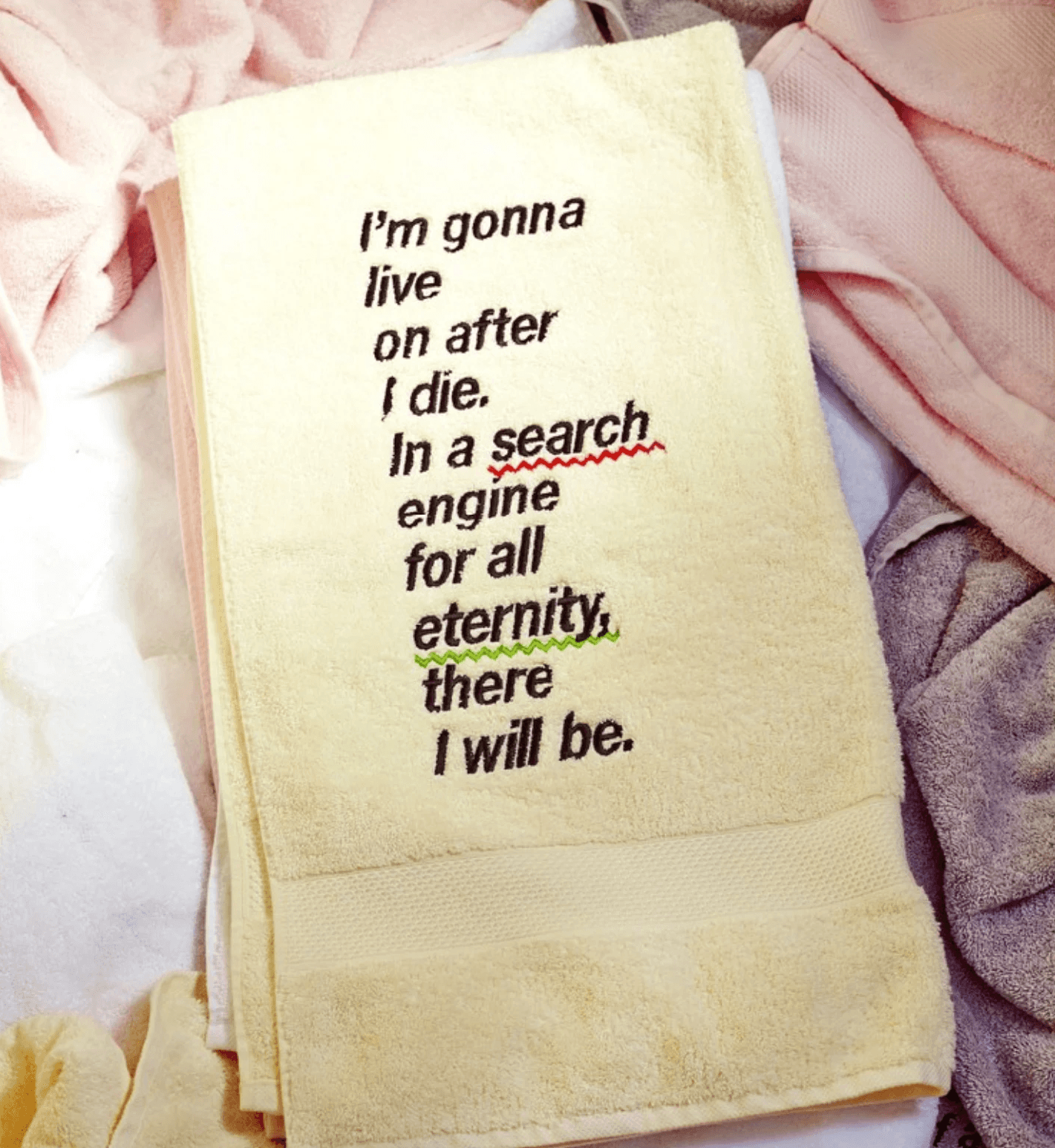
Technology has changed how we think about memory and permanence. This idea influenced my approach to digital remembrance and nostalgia.
Concept development
The initial concept for the project was a Digital Time Capsule app, where users could curate a collection of memories for future reflection. This addressed a core tension in digital memory, uncovered through initial rounds of user testing: we capture everything but reflect on nothing. I designed an experience that shifts from passive accumulation to intentional curation, empowering users to preserve meaningful moments and revisit them on their own terms, rather than through algorithmically-surfaced notifications that commodify nostalgia.
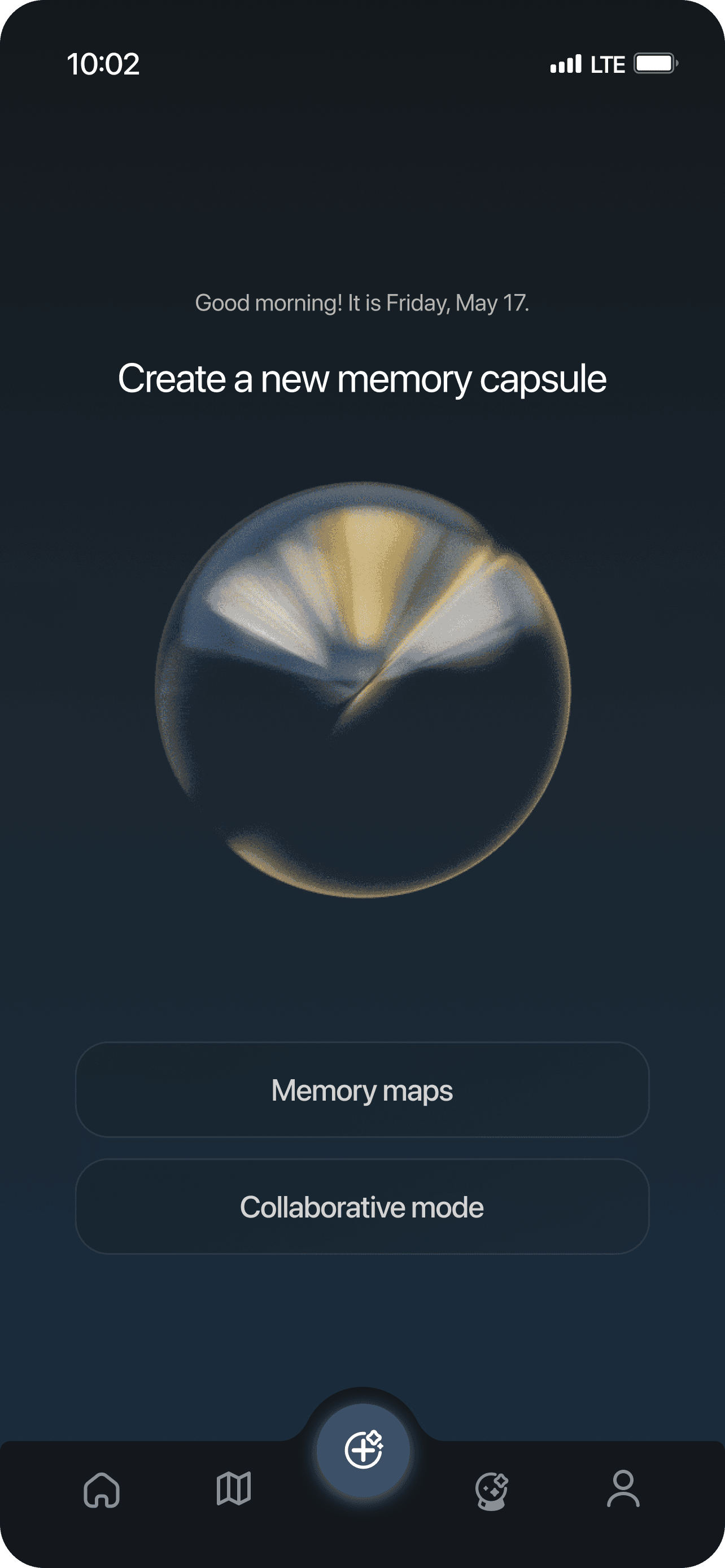
Home page
The home page introduces the core concept; the simple interface encourages users to start their journey of reflection with ease.
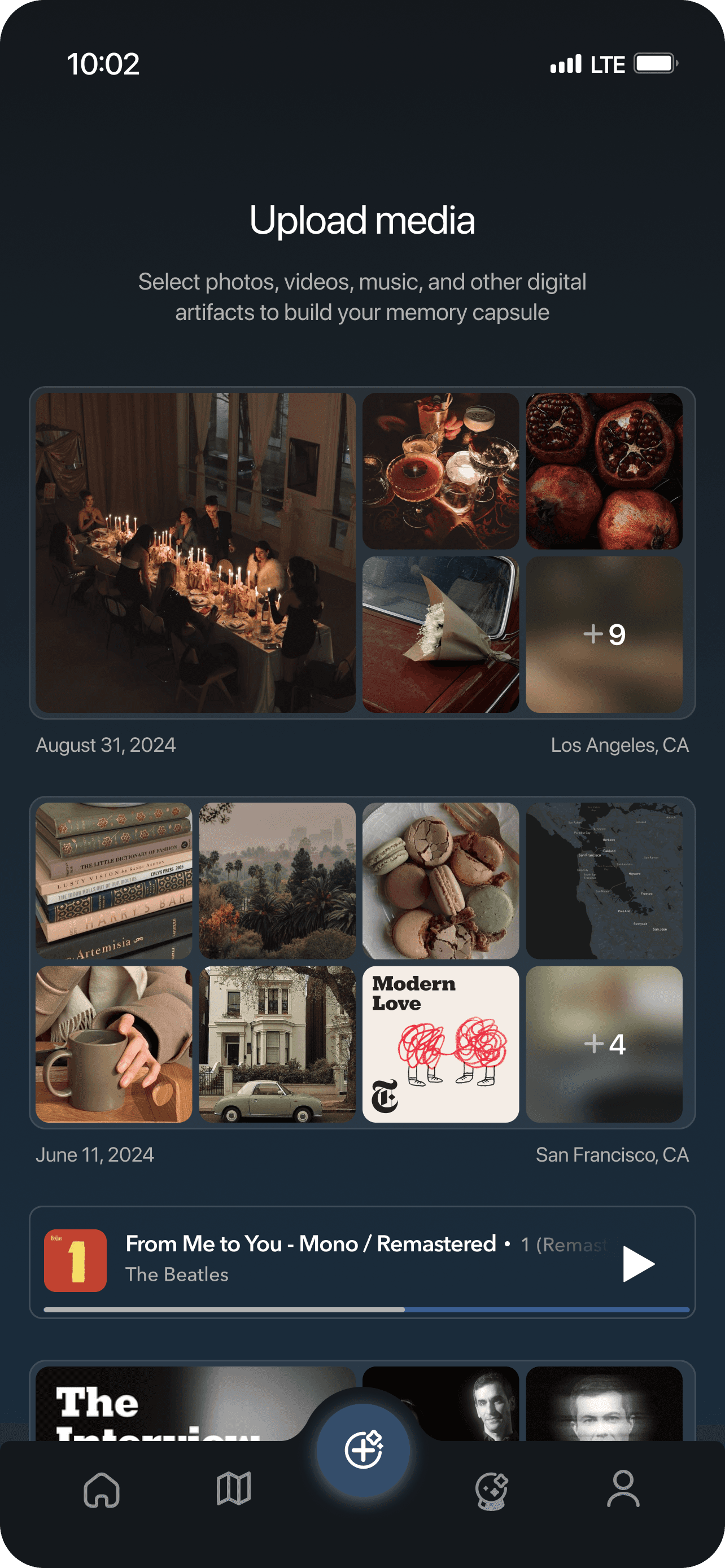
Creating a capsule
The design for uploading media emphasizes a streamlined process, allowing users to focus on the emotional value of what they’re preserving.
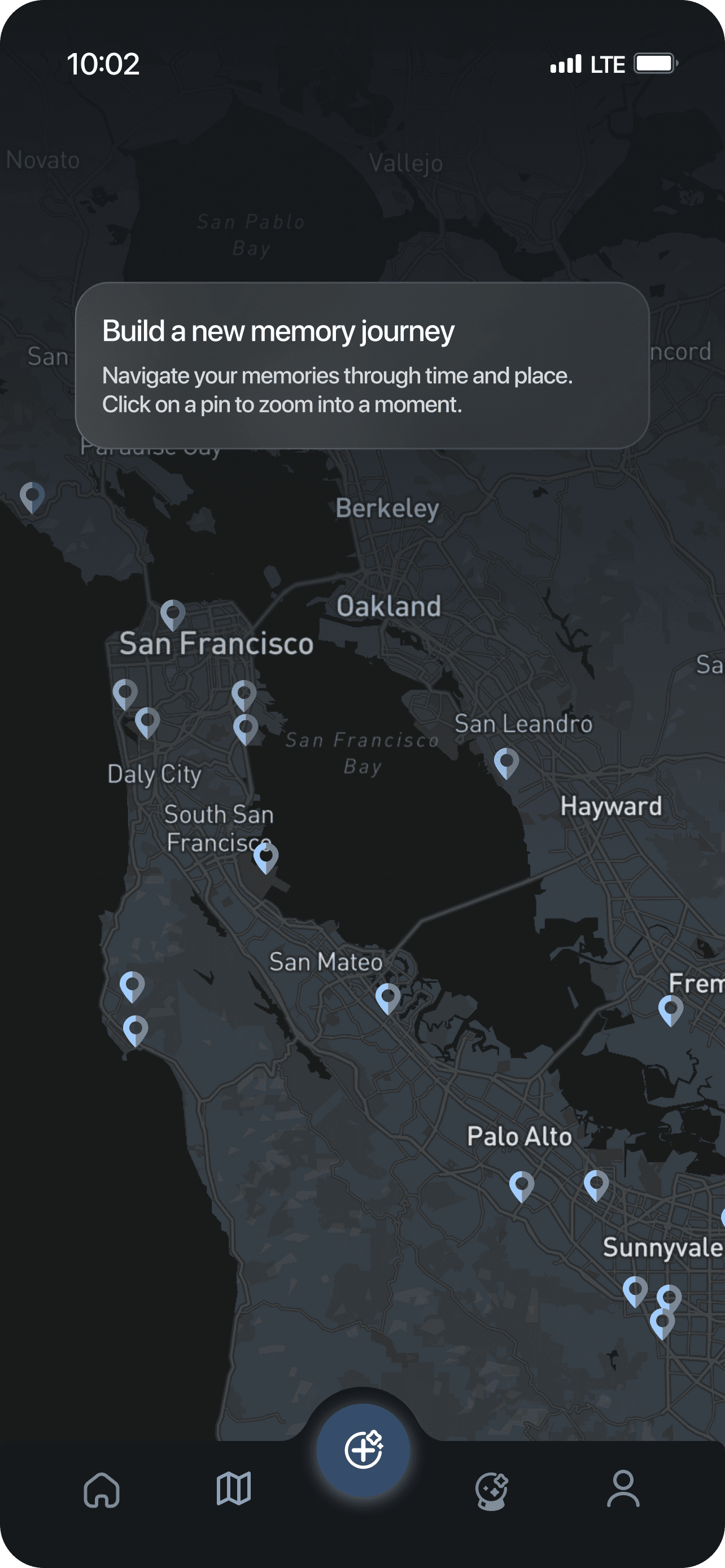
Building a memory journey
The 'memory journey' map invites users to connect their memories in a narrative-driven way, visualizing the path their recollections take across time and space.
physical prototype
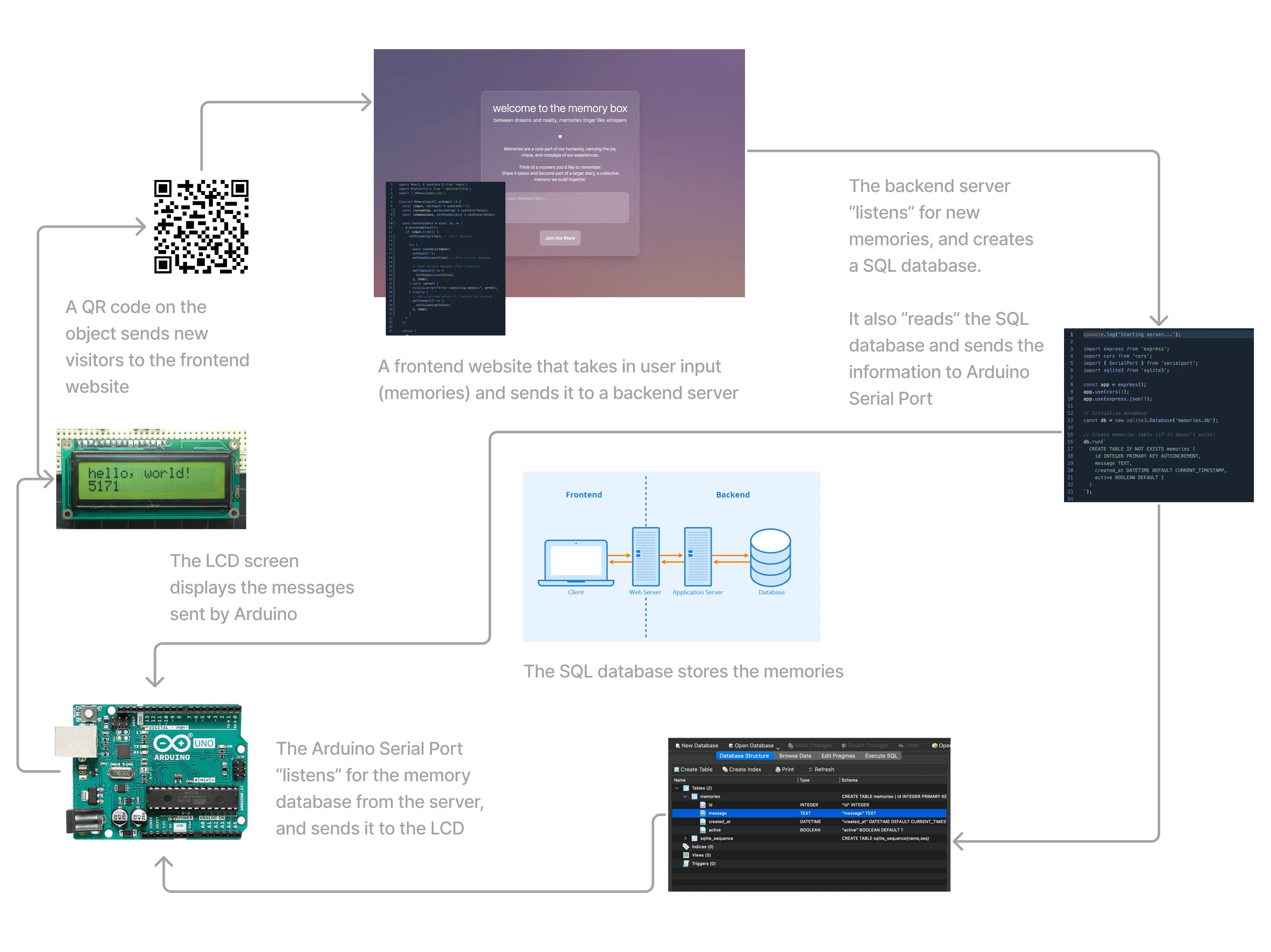
In the next iteration, I shifted from a purely digital interface to a physical artifact: an Arduino-powered LCD display that streams user-submitted memories in real-time. This pivot transformed the experience from individual reflection to collective participation — users contribute digitally, but memories surface on a shared screen, creating an ambient, communal memory stream. The scrolling LCD became the core interaction model: its transient, ever-changing display mirrors how memories surface and fade in our digital lives.
final product
The final iteration moved to a web-based platform, prioritizing accessibility and scale. A digital interface allowed anyone to contribute and experience the memory stream without physical constraints, transforming it into a truly collective space. The design maintained the ephemeral quality of the physical prototype: memories surface in a continuous scroll, cycling in and out to reflect the fluid, transient nature of how we experience our digital past.